









Why Traditional Knee Implants Fall Short
Knee replacement surgeries are hailed as one of the greatest advances in modern medicine, offering relief from chronic pain and limited mobility. However, not all patients find themselves completely satisfied post-surgery. Recent studies reveal that nearly 30% of patients report dissatisfaction with their traditional knee implants.
This dissatisfaction stems from various factors:
-
Unnatural Movement:
Many traditional implants fail to replicate the complex mechanics of a natural knee, leaving patients feeling restricted.
-
Lingering Pain:
Improper alignment and design flaws can lead to persistent discomfort.
-
Reduced Confidence:
The lack of stability often associated with traditional implants may deter patients from engaging in routine activities.
Patients undergoing knee replacement don’t just seek pain relief; they aspire to regain their independence and return to a life of natural, unrestricted motion. This is where innovations like the Excel MPK step in, bridging the gap between function and freedom.
Understanding the Concept of “Natural Motion”
The human knee is a marvel of biomechanics. Its unique design allows for a harmonious interaction between bones, ligaments, and muscles, providing a stable yet flexible range of motion. A key aspect of this is medial pivoting, where the inner part of the knee remains stable while the outer side rotates, facilitating fluid, natural movements.
Traditional knee implants often oversimplify this motion, focusing on basic functionality rather than replicating the intricacies of a natural knee. As a result, patients may experience stiffness, instability, or a mechanical feeling in their joint.
Achieving “natural motion” in a knee replacement is not merely about movement—it’s about creating a seamless experience where the joint feels intuitive and stable.
Excel MPK: A Revolution in Knee Replacement
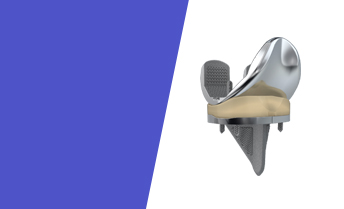
Excel MPK (Medial Pivot Knee) stands as a breakthrough in orthopedic innovation. Designed to mimic the physiological mechanics of a natural knee, it provides a solution that addresses the shortcomings of traditional implants.
What Sets Excel MPK Apart?
- Medial Stability: The implant replicates the natural pivoting motion of the knee, ensuring the medial side remains stable while allowing rotational freedom on the lateral side. This results in smoother, more natural movements.
- Enhanced Flexion: Excel MPK accommodates up to 155° of bending, empowering patients to perform deep knee movements like squatting or kneeling—tasks often challenging with conventional implants.
- Streamlined Recovery: Its anatomical design not only fits more comfortably but also encourages faster rehabilitation, enabling patients to regain mobility and confidence sooner.
- Durable and Reliable: Engineered with high-performance materials, the implant offers longevity and resilience, catering to active lifestyles and minimizing the need for revision surgeries.
The Real Impact: Patients and Surgeons Speak
Patients who have opted for Excel MPK often describe a transformation in their quality of life. Activities once deemed impossible—like climbing stairs, bending to garden, or playing with grandchildren—become achievable again.
For surgeons, Excel MPK represents precision and predictability. Its innovative design ensures a more reliable fit, leading to better post-operative outcomes and fewer complications.
Beyond Pain Relief: Embracing a New Life
Excel MPK doesn’t just restore mobility; it restores confidence. By delivering motion that closely mimics the natural knee, it allows patients to move freely, without hesitation or fear of instability. This freedom translates into a renewed zest for life, where everyday tasks and recreational activities feel effortless.
Conclusion
Knee replacement is about more than just replacing a joint—it’s about reclaiming life. While traditional implants have served their purpose, the demand for a solution that offers true, natural-like movement has driven the development of advanced designs like Excel MPK.
For those seeking to restore the kinematics of a natural knee, Excel MPK offers a compelling choice. It’s more than an implant; it’s a commitment to helping patients live life to the fullest, one confident step at a time.
By understanding patient needs and harnessing the latest in biomechanical research, Excel MPK is shaping the future of knee replacement surgery—one that prioritizes comfort, motion, and freedom.
Frequently Asked Questions
The concept of a natural-motion knee focuses on restoring stable, physiological movement after knee replacement. Medial pivot designs aim to reproduce an important aspect of native knee kinematics, where the medial side remains relatively stable while the lateral side allows controlled movement. This approach seeks to provide a more intuitive, stable, and natural-feeling knee during everyday activities.
Natural motion refers to designing and positioning a knee replacement to reproduce key aspects of native knee biomechanics, rather than simply restoring movement between artificial surfaces. In a medial pivot design, the medial compartment provides relative stability while the lateral compartment permits controlled translation and rotation during flexion, supporting a more physiological movement pattern.
A natural-motion approach may support medial stability, controlled rotation, functional flexion, and a more natural-feeling knee after replacement. Medial pivot designs aim to reproduce aspects of native knee movement and may support activities requiring flexion and stability. However, outcomes also depend on implant selection, alignment, surgical technique, rehabilitation, and individual patient factors.
Natural-motion concepts are an important direction in the evolution of knee arthroplasty, with increasing interest in reproducing native knee kinematics, improving stability, and addressing patient expectations beyond pain relief. Medial pivot designs are one approach being studied to achieve this. However, knee replacement outcomes remain influenced by multiple factors, and no single implant concept is universally optimal for every patient.
Natural-motion implant concepts aim to address challenges such as postoperative instability, stiffness, unnatural-feeling movement, and difficulty reproducing native knee kinematics. Medial pivot designs attempt to provide a stable medial compartment with controlled lateral movement, potentially supporting more physiological motion during flexion. However, implant design is only one contributor to these outcomes; alignment, soft-tissue balance, surgical technique, and rehabilitation are also important.









Leave a comment