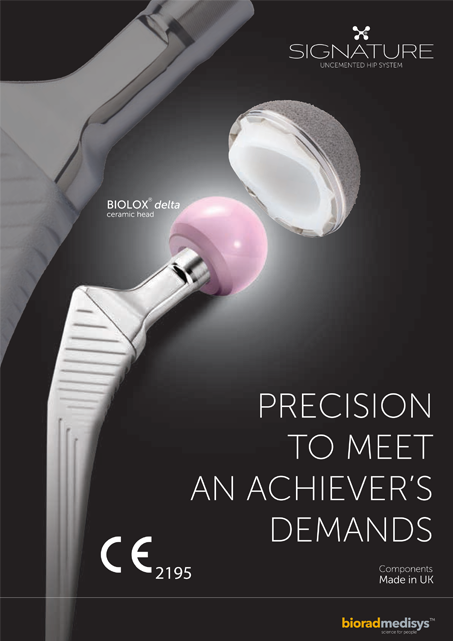
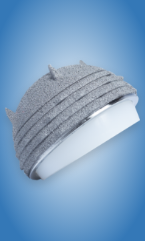
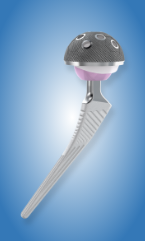
SIGNATURE Acetabular Liner

​​Material Specs: Highly Cross Linked Polyethylene (XLPE)​

  • Longevity: XLPE wears less and lasts longer.
  • 20° hooded linear.​
  • Locking Mechanism: A Star-shaped profile avoids rotational movement and provide robust locking.​
  • Sizing chart as per brochure

Brochure

SIGNATURE Acetabular Liner

Product Code

SIGNATURE Acetabular Liner - Product Code

Frequently Asked Questions

What is the SIGNATURE Acetabular Liner?
The SIGNATURE Acetabular Liner is a polyethylene bearing component used in total hip arthroplasty. It is manufactured from highly cross-linked polyethylene (XLPE) and is designed to provide a durable articulating surface within the acetabular cup. The liner is available in a 20° hooded configuration and incorporates a locking mechanism designed to minimize rotational movement.
What are the key features of the SIGNATURE Acetabular Liner?
The SIGNATURE Acetabular Liner is made from highly cross-linked polyethylene (XLPE), designed for reduced wear and longer service life. It features a 20° hooded liner and a star-shaped locking profile designed to prevent rotational movement and provide secure fixation within the acetabular shell. Sizing is provided according to the product brochure.
What is the difference between a neutral liner and a hooded liner?
A neutral liner has a symmetrical geometry without an elevated rim. A hooded liner incorporates an elevated section, such as the SIGNATURE Liner's 20° hood, which can provide additional coverage and may help enhance stability in selected orientations. Liner selection depends on component positioning, patient anatomy, stability requirements, and the surgeon's intraoperative assessment.
How does an acetabular liner affect hip replacement performance?
The acetabular liner forms the bearing surface against the femoral head, so its material, geometry, fixation, and positioning can influence wear, stability, range of motion, and implant longevity. The SIGNATURE Liner uses highly cross-linked polyethylene (XLPE), which has lower wear rates than conventional polyethylene in clinical studies.
What causes wear in hip replacement liners?
Wear occurs primarily through repeated contact and relative movement between the femoral head and acetabular liner during everyday activities. Wear can be influenced by bearing materials, component positioning, femoral-head size, loading, and surface damage. Polyethylene wear generates particles that may contribute to osteolysis and aseptic loosening. Highly cross-linked polyethylene has been developed to reduce wear compared with conventional polyethylene.

Related Products

Signature Duo

Hip System

Explorearrow
SIGNATURE NX with SIGNATURE Stem

Stem and Cup Assembly

Explorearrow
volume-unmute-yellow-icon volume-unmute-blue-icon