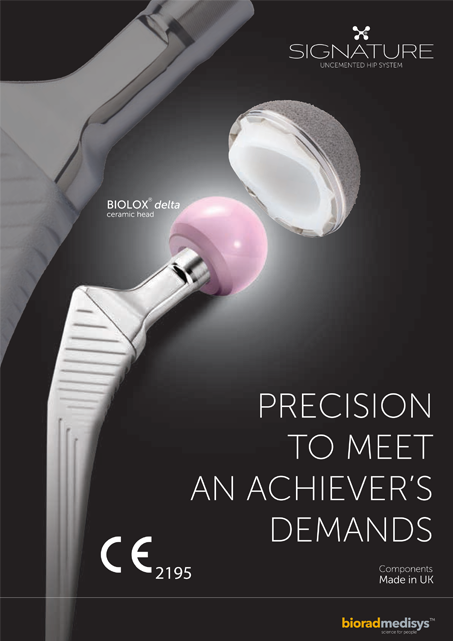
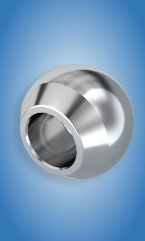
Ceramic Head

FOURTH GENERATION ADVANCED CERAMIC​

BIOLOX® Delta is the Fourth-generation advanced ceramic head with 13 years of successful clinical experience and over 5 million implanted components.​

  • Lowest wear rate.
  • Outstanding biocompatibility.
  • Excellent stability​.
  • Sizes(mm): 28, 32, 36​​
  • Neck length options: Small (-4), Medium (0), Large (+4)​

Brochure

Product Code

Ceramic Head - Product Code

Frequently Asked Questions

https://www.orthovasive.com/product/ceramic-head/
A ceramic femoral head is the ball-shaped component of a hip replacement that articulates with the acetabular liner to recreate the natural hip joint. Ceramic offers high hardness, low friction, and excellent wear resistance. The Orthovasive Ceramic Head uses BIOLOX® Delta, a fourth-generation advanced ceramic designed for high performance and long-term clinical use.
What are the key features of the Orthovasive Ceramic Head?
The Orthovasive Ceramic Head uses BIOLOX® Delta, a fourth-generation advanced ceramic with reported clinical experience spanning more than 13 years and over 5 million implanted components. Key features include low wear, excellent biocompatibility, and stability. It is available in 28, 32, and 36 mm diameters, with small (-4), medium (0), and large (+4) neck lengths.
What materials are used to manufacture ceramic femoral heads?
Modern ceramic femoral heads are commonly manufactured from alumina-based ceramics, zirconia, or alumina matrix composites such as zirconia-toughened alumina (ZTA). The Orthovasive Ceramic Head uses BIOLOX® Delta, an advanced alumina matrix composite combining alumina with zirconia to provide high hardness, wear resistance, and improved fracture toughness.
How do ceramic implants contribute to smooth joint movement?
Ceramic has a highly smooth surface, high hardness, low friction, and excellent wear resistance. These properties help facilitate smooth articulation between the femoral head and acetabular bearing surface while minimizing wear. Ceramic bearings may therefore help reduce the generation of wear particles and support long-term implant performance.
Are ceramic hip implants suitable for younger patients?
Ceramic bearings may be considered for younger and more active patients because of their low wear characteristics and potential to reduce wear-related osteolysis. However, the choice of bearing surface should consider patient activity, anatomy, implant compatibility, and individual clinical factors, and should be made in consultation with the treating orthopaedic surgeon.

Related Products

CoCr Head

CoCrMo Alloy

Explorearrow
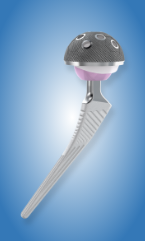
SIGNATURE NX cup with SIGNATURE stem

Stem and Cup Assembly

Explorearrow
volume-unmute-yellow-icon volume-unmute-blue-icon