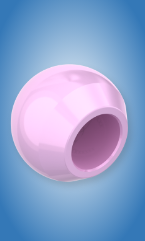
CoCr Head

Material Specs: CoCrMo Alloy

  • Multiple neck length head options: To optimally restore joint biomechanics intra-operatively
  • Sizes(mm): 22.2 (-2.5 ,0, 2.5)
  • Sizes(mm): 28, 32, 36 ( -4, 0 , 4, 8)

Brochure

Product Code

CoCR Head - Product Code

Frequently Asked Questions

What is the advantage of a polished CoCr femoral head?
A polished cobalt-chromium (CoCr) femoral head provides a smooth articulating surface with high hardness, wear resistance, strength, and corrosion resistance. These properties support smooth articulation and durability in hip arthroplasty. The Orthovasive CoCr Head also offers multiple neck-length options to help surgeons restore joint biomechanics intra-operatively.
What materials are used in CoCr femoral heads?
CoCr femoral heads are typically manufactured from cobalt-chromium-molybdenum (CoCrMo) alloy. The Orthovasive CoCr Head specifies CoCrMo alloy as its material. This alloy is widely used in hip arthroplasty because of its high strength, hardness, wear resistance, and corrosion resistance.
What is cobalt-chromium alloy?
Cobalt-chromium-molybdenum (CoCrMo) is a metallic alloy commonly used in orthopaedic implants. It contains predominantly cobalt and chromium, with molybdenum and small amounts of other elements. Its high strength, hardness, wear resistance, and corrosion resistance make it particularly suitable for femoral heads and other components of hip arthroplasty.
Can CoCr femoral heads be used in revision hip replacement?
Yes. CoCr femoral heads can be used in selected revision total hip arthroplasty procedures, depending on the existing stem, taper compatibility, bearing surface, and clinical requirements. The choice of femoral head should be determined by the surgeon based on implant compatibility, patient factors, and the specific revision strategy.
How do modern hip implants improve patient outcomes?
Modern hip implants are designed to restore hip function, relieve pain, improve mobility, and support long-term implant survival. Advances in implant materials, bearing surfaces, component design, and modularity allow surgeons to better address individual anatomy and functional requirements. However, outcomes depend on implant selection, surgical technique, patient factors, and postoperative rehabilitation.

Related Products

Ceramic Head

Fourth Generation Advanced Ceramic

Explorearrow
SIGNATURE NX Cup with SIGNATURE Stem

Stem and Cup Assembly

Explorearrow
volume-unmute-yellow-icon volume-unmute-blue-icon