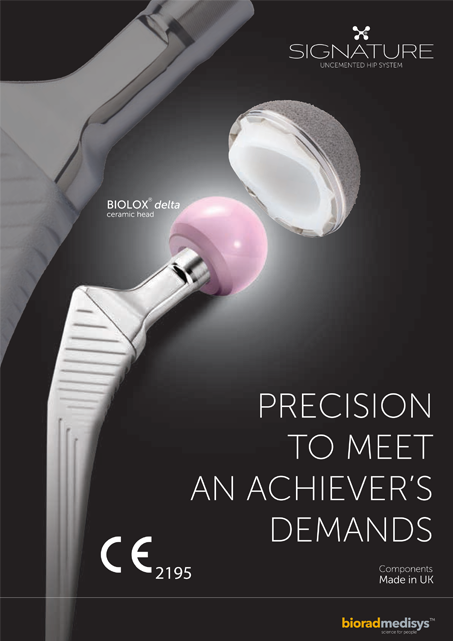
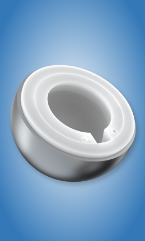
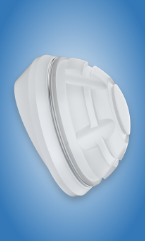
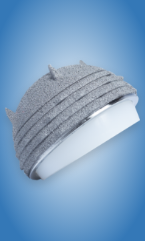
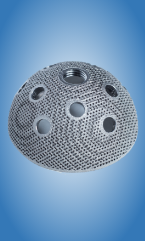
Cotilo Signature TPS

  • Signature, un cotilo poroso recubierto desarrollado por Biorad, ofrece opciones de fijación y soporte que pueden atender a una gran variedad de pacientes.
  • El diseño auténticamente semiesférico con una mayor área de contacto del borde nos ofrece una mejor estabilidad.
  • Recubrimiento asimétrico de titanio sinterizado de 700+/- 50 micras de alta porosidad según las normas ASTM.
  • Diseño de orificios agrupados para una mejor fijación y estabilidad del tornillo.
  • La superficie interna está muy pulida para evitar la fricción con el inserto.

Catálogo

Cotilo Signature TPS

Product Code

SIGNATURE TPS Cup - Product Code

Frequently Asked Questions

What is the SIGNATURE TPS Cup?
The SIGNATURE TPS Cup is a coated porous acetabular cup designed for uncemented total hip arthroplasty. It features a true hemispherical design for greater rim-interface contact, an asymmetric sintered titanium coating of 700 ± 50 μm, a high-porosity surface, and a cluster-hole design for screw fixation and stability. Its polished internal surface is designed to minimize friction with the liner.
Why is biological fixation important in hip replacement?
Biological fixation helps an uncemented implant achieve long-term stability by allowing bone to grow onto or into the implant surface. This secondary fixation complements initial mechanical stability and can help reduce the risk of loosening. Porous surfaces are designed to provide an environment that supports bone ingrowth and osseointegration.
How does the SIGNATURE TPS Cup help improve implant stability?
The SIGNATURE TPS Cup combines a true hemispherical design with greater rim-interface contact for stability. Its high-porosity sintered titanium coating is designed to support biological fixation, while the cluster-hole design allows supplementary screw fixation. Together, these features are intended to provide initial stability and support subsequent bone integration.
How does bone grow into an uncemented hip implant?
Uncemented implants are initially stabilized through press-fit fixation. Over time, bone can grow onto or into the implant's porous or textured surface, creating biological fixation. The porous structure provides spaces for bone ingrowth, while adequate initial stability helps support this process. This combination of primary mechanical fixation and secondary biological fixation contributes to long-term implant stability.
How can I improve recovery after hip replacement surgery?
Recovery can be supported by following your surgeon's weight-bearing and activity instructions, completing prescribed physiotherapy exercises, gradually increasing activity, taking medications as directed, and following precautions recommended for your surgical approach. Maintaining wound care and promptly reporting signs of infection, excessive swelling, or other concerns can also support safe recovery.

Productos relacionados

Cotilo Bipolar AVATAR

Sistema bipolar

Explorararrow
Avatar Cemented Cup

Uncemented Hip System

Explorararrow
Signature Duo

Dual Mobility Cup

Explorararrow
Signature NX Cup

Fixation Redefined

Explorararrow
volume-unmute-yellow-icon volume-unmute-blue-icon